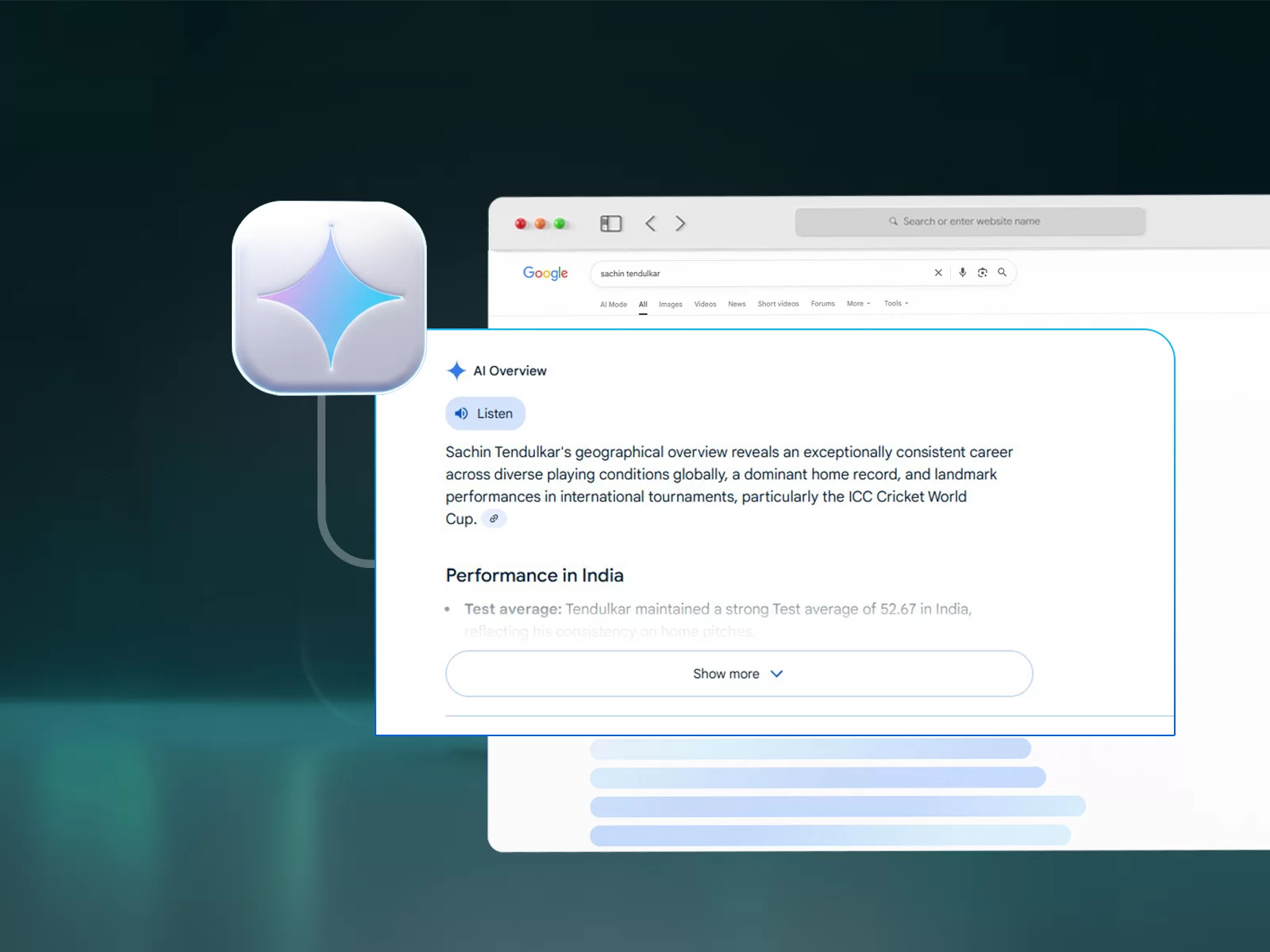
The way people search online is undergoing a massive transformation. Traditional keyword-based search is giving way to Generative AI-powered search — where answers are conversational, context-aware, and often delivered without the need to click on a website. For businesses, this shift isn’t just a trend; it’s a turning point that will decide who thrives and who gets left behind in the digital space.
In this blog, we’ll break down what generative AI means for search, how it impacts businesses, and the strategic steps you can take to stay visible and drive growth.
What is Generative AI & How It’s Entering Search
Generative AI refers to advanced AI models like ChatGPT, Google Gemini, and Bing’s Copilot that can create content, summarize information, and provide answers in a conversational format. Unlike traditional search engines, which provide a list of links, generative AI gives direct, synthesized answers.
Examples of this shift:
- Google AI Overviews: Summarized results at the top of search pages.
- Bing Chat: Conversational answers with citations.
- ChatGPT with browsing: Instant insights instead of navigating multiple sites.
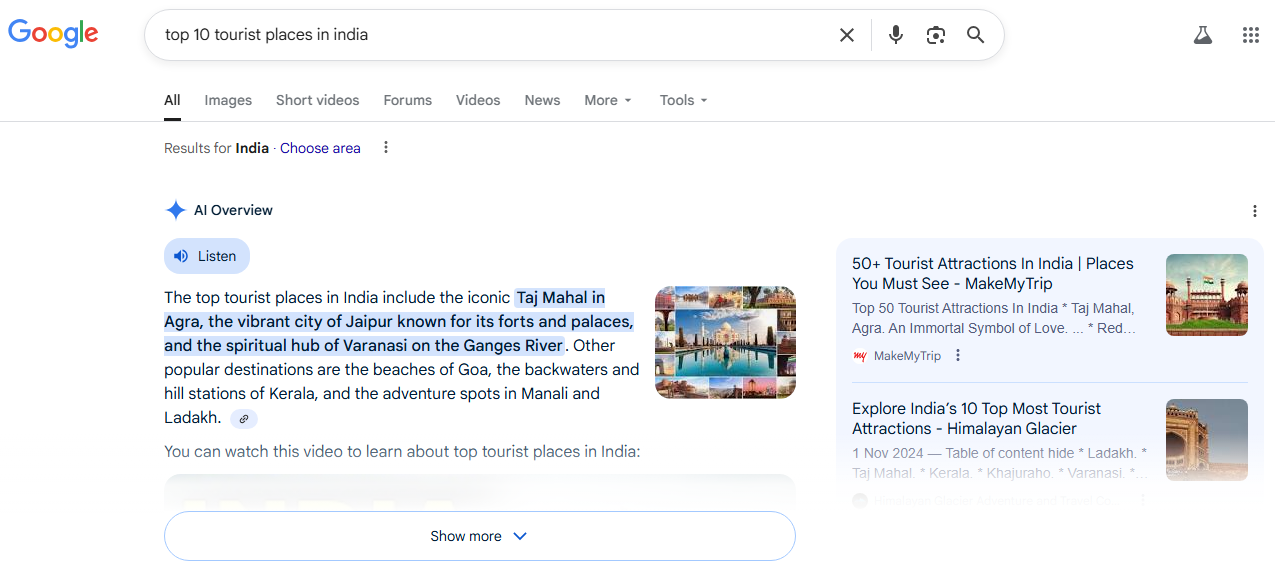
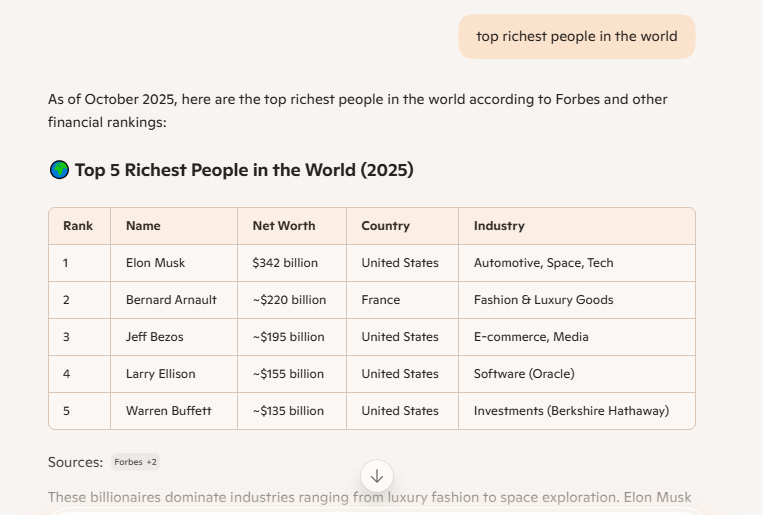
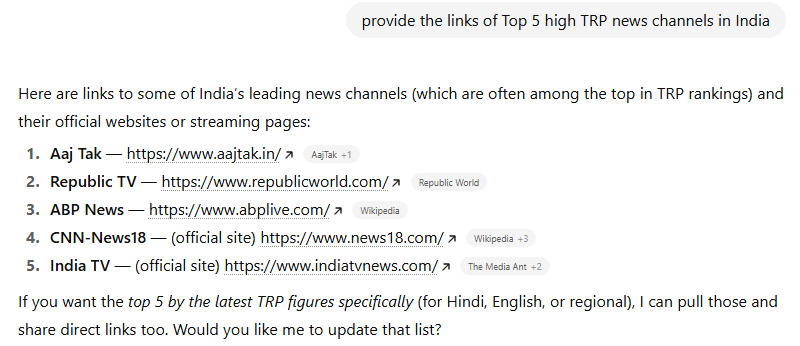
This shift means businesses can no longer rely solely on ranking #1 in traditional results — the AI might summarize content without sending clicks to your site.
Major Changes in Search Behavior
1. Rise of Zero-Click Searches
Studies show that more users are getting answers directly in the search interface, leading to fewer clicks to external websites. For businesses, this could mean a dip in organic traffic if content isn’t optimized for AI systems.
2. Conversational, Contextual Queries
Users are asking full questions instead of keyword fragments. For example:
- Old style: “best CRM software”
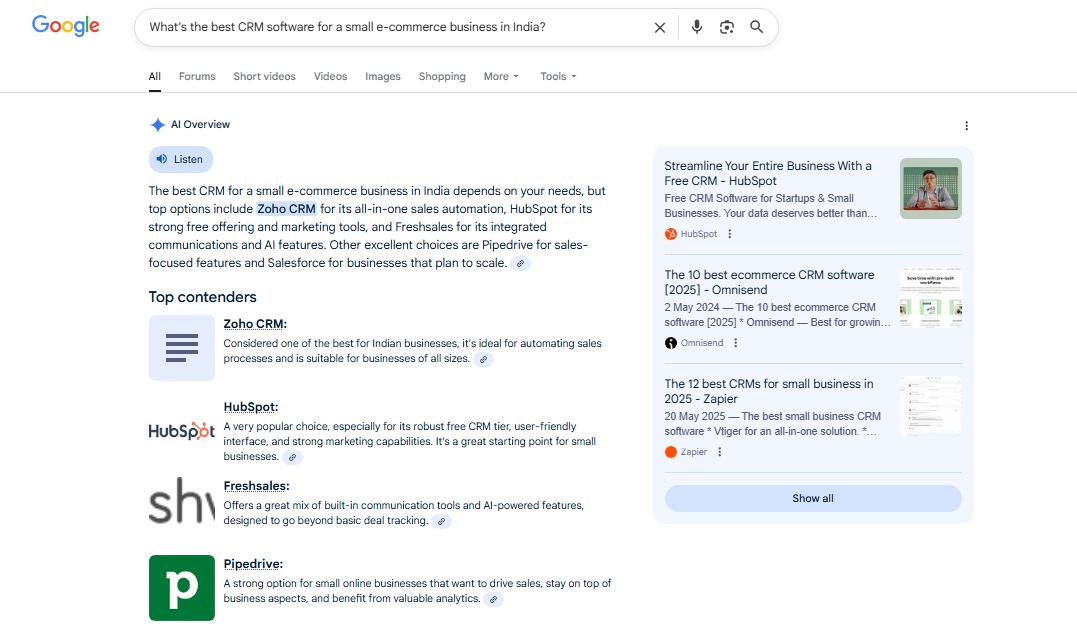
- New style: “What’s the best CRM software for a small e-commerce business in India?”
3. Trust & Verification
While AI responses are convenient, users trust them more when answers include credible sources and citations. Businesses with authoritative, well-structured content are more likely to be referenced.
Impacts on Businesses & Digital Marketing
- Reduced Organic Traffic: If AI answers satisfy the query, fewer people may click through to your site.
- Content Structure Matters: AI looks for clarity, conciseness, and authority. Poorly structured blogs risk being ignored.
- New Visibility Opportunities: Businesses that adapt can become the “source” AI tools reference, boosting authority and brand awareness.
- Need for GEO/AEO: Concepts like Generative Engine Optimization (GEO) and Answer Engine Optimization (AEO) are emerging to guide how businesses can make content AI-friendly.
What Your Business Should Do Now
Here are actionable strategies to prepare for the AI-driven search future:
1. Audit Your Current Content
- Identify high-performing blogs and service pages.
- Update them with conversational Q&A sections.
- Add FAQs that match user intent.
2. Optimize for AI-Friendly Content
- Use structured data and schema markup to make your site machine-readable.
- Write clear, authoritative answers within your content.
- Add sources, citations, and statistics to build trust.
3. Focus on Conversational Keywords
- Include long-tail, natural language queries.
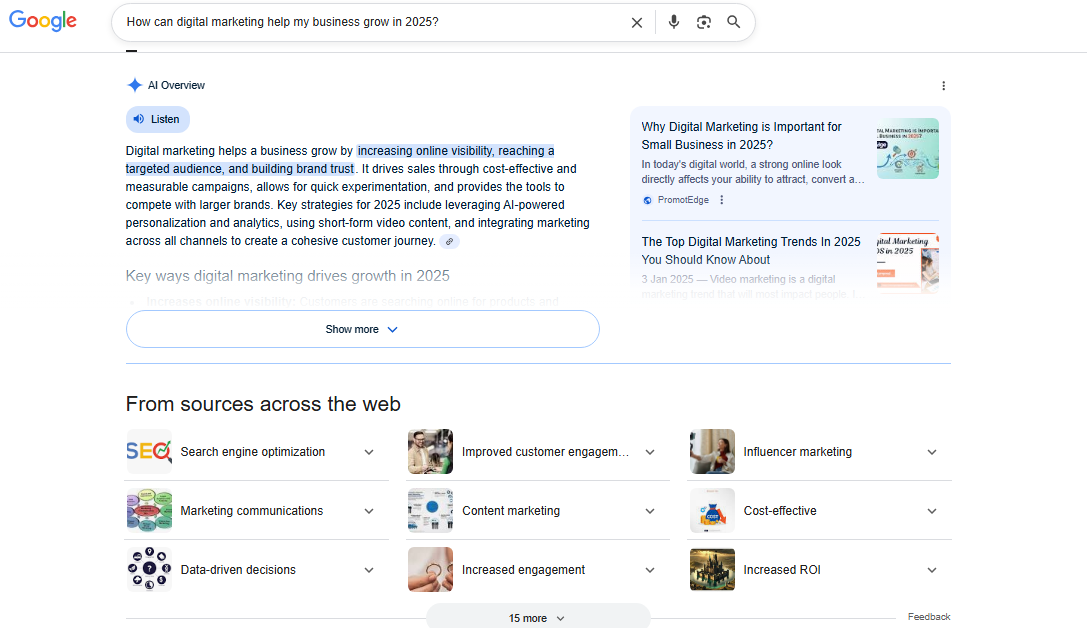
- Think like your customer: “How can digital marketing help my business grow in 2025?”
4. Build Authority & Trust Signals
- Regularly update content with fresh stats.
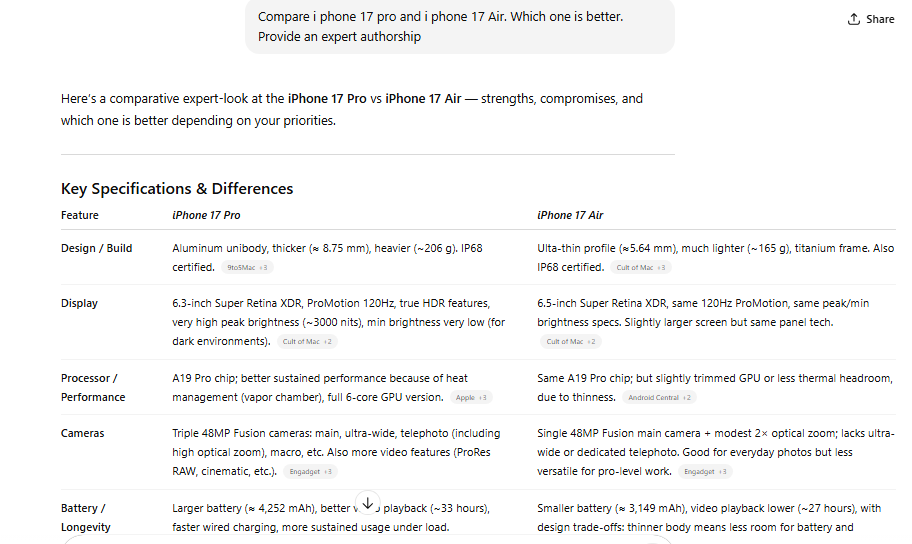
- Showcase testimonials, reviews, and expert authorship.
- Publish thought leadership pieces.
5. Monitor Zero-Click Trends
- Track keywords where AI results dominate.
- Focus on content formats AI can’t easily summarize — such as in-depth case studies, unique data, or interactive tools.
6. Experiment with New Formats
- Create short, snackable content alongside long-form blogs.
- Use visuals, comparison charts, and infographics.
- Test conversational guides and “how-to” tutorials.

- Misinformation: AI can sometimes generate inaccurate answers. If your brand is referenced, accuracy is crucial.
- Traffic Drops: Businesses that fail to adapt may see declines in leads.
- Rapid Evolution: Search technology is evolving monthly. Continuous monitoring is necessary.
Conclusion – Adapt Now, Lead Tomorrow
Generative AI is not just the future of search — it’s already here. For business owners, this means one thing: adapt fast, or risk losing visibility. By auditing your content, optimizing for conversational queries, and aligning with AI-driven search behavior, you can turn this shift into an opportunity for growth.
Ready to future-proof your business for the AI era? Wishtree Infosolutions can help you optimize your digital marketing strategy for AI-powered search.